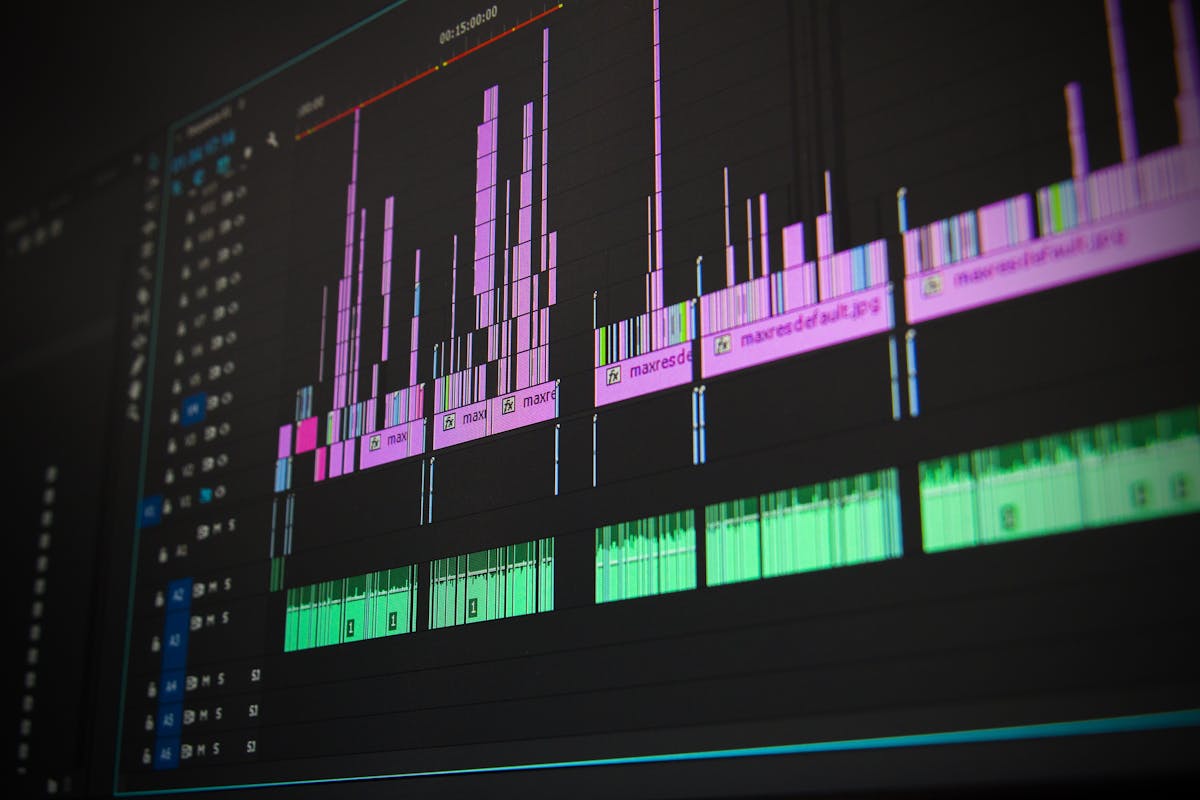
The democratization of music production has reached a tipping point. While major labels once held monopolies on professional-grade recording, mixing, and marketing resources, today’s bedroom producers are leveraging artificial intelligence to compete at levels previously unimaginable. From Grammy-nominated albums recorded in spare bedrooms to viral hits mixed entirely with AI-assisted plugins, the landscape has fundamentally shifted—and the numbers prove it.
The New Economics of Music Production
Traditional studio time that once cost $500-2000 per day can now be replicated with AI-powered tools for under $50 monthly. Consider the trajectory of producers like Steve Lacy, who recorded “Bad Habit”—a Billboard Hot 100 number one—primarily on his iPhone using GarageBand. While Lacy’s success predates many current AI tools, it illustrates how resourceful creators have always found ways to circumvent traditional gatekeepers.
Today’s AI landscape offers even more dramatic cost reductions. Mastering services that charged $100-300 per track now compete with AI platforms like LANDR and eMastered, offering unlimited mastering for $9-25 monthly. Meanwhile, session musicians commanding $200-500 per recording session face competition from AI composition tools that generate professional-quality stems for a fraction of the cost.
AI Tools Reshaping the Producer Workflow
Modern bedroom producers are building comprehensive workflows around AI assistance. AIVA and Amper Music handle initial composition and arrangement, while Splice’s AI-powered sample recommendations help producers discover sounds that would have required extensive digging through record crates or expensive sample libraries. Vocal processing, once requiring expensive hardware compressors and skilled engineers, now happens through AI plugins like iZotope’s Neutron, which can automatically balance entire mixes.
The visual component of music marketing—historically a major label advantage—has also been democratized. Professional-quality album artwork, social media assets, and promotional materials that once required graphic design budgets of thousands can now be created using AI photo tools like PixelPanda, allowing artists to maintain consistent visual branding without traditional design costs.
Real-World Success Stories
Take bedroom producer Jai Paul, whose leaked demos—recorded in his home studio using AI-assisted production techniques—generated major label bidding wars and influenced artists from Drake to Frank Ocean. More recently, producers like Monte Booker have built careers mixing lo-fi aesthetics with AI-enhanced sound design, creating signature sounds that compete directly with major label production.
The data supports these anecdotal successes. According to MIDiA Research, independent artists captured 43.1% of the recorded music market in 2022, up from 31.1% in 2018. Much of this growth comes from bedroom producers who’ve learned to leverage AI tools for everything from initial ideation to final mastering.
Strategic Advantages of AI-Powered Independent Production
Beyond cost savings, AI offers bedroom producers strategic advantages that even major labels struggle to replicate. Speed represents perhaps the biggest differentiator. While major label releases typically require months of committee approvals and revision cycles, AI-assisted producers can respond to trends, news cycles, and cultural moments in real-time.
Producer Kenny Beats exemplifies this approach, using AI tools to rapidly prototype beats during live streaming sessions, then refining the most promising ideas into full productions. This iterative, fast-feedback process allows independent creators to experiment with sounds and styles that might be deemed too risky by label executives.
AI also enables hyper-personalization at scale. Bedroom producers can create multiple versions of tracks optimized for different playlists, demographics, or platforms—something that would require significant additional budget in traditional label systems. Tools like Endlesss allow real-time collaborative production across geographical boundaries, enabling bedroom producers to work with artists globally without travel or studio rental costs.
Navigating the Creative Balance
The most successful AI-assisted producers maintain clear creative boundaries, using artificial intelligence as enhancement rather than replacement. Grammy-winning producer FKA twigs uses AI for sound design and texture creation while maintaining full creative control over songwriting and arrangement. This approach preserves artistic authenticity while leveraging AI’s efficiency gains.
Industry veterans recommend the 80/20 rule: let AI handle routine technical tasks like EQ suggestions, compression settings, and reference track analysis, while reserving creative decisions—melody, harmony, arrangement, and artistic direction—for human judgment. This balance allows producers to compete with major label technical resources while maintaining the creative edge that originally drew listeners to independent music.
The Path Forward
As AI tools become increasingly sophisticated, the competitive advantages available to bedroom producers will only expand. Voice synthesis technology already allows producers to create professional-quality vocal arrangements without hiring session singers. Spatial audio processing, once limited to high-end studios, is becoming available through AI-powered plugins at consumer price points.
The bedroom producers thriving in this environment share common traits: they embrace AI as amplification rather than automation, maintain focus on authentic artistic vision, and understand that technology ultimately serves story and emotion. In a landscape where anyone can access professional-grade tools, the winners will be those who use AI to tell more compelling stories, connect more authentically with audiences, and iterate more rapidly on creative ideas. The playing field hasn’t just been leveled—it’s been completely reimagined.
For a related perspective, see Digital Filter Sales.